

Unmasking Hidden Flaws: The Battle-Tested Path to Smart Kitchen Innovation
Key Takeaways
Still, this shift towards user-centric design is a testament to the industry’s understanding of the importance of practicality and ease of use in kitchen innovation.
In This Article
Summary
Here’s what you need to know:
Take the ‘smart’ slow cooker that gained popularity in the early 2010s, for instance.
Frequently Asked Questions in Kitchen Innovation
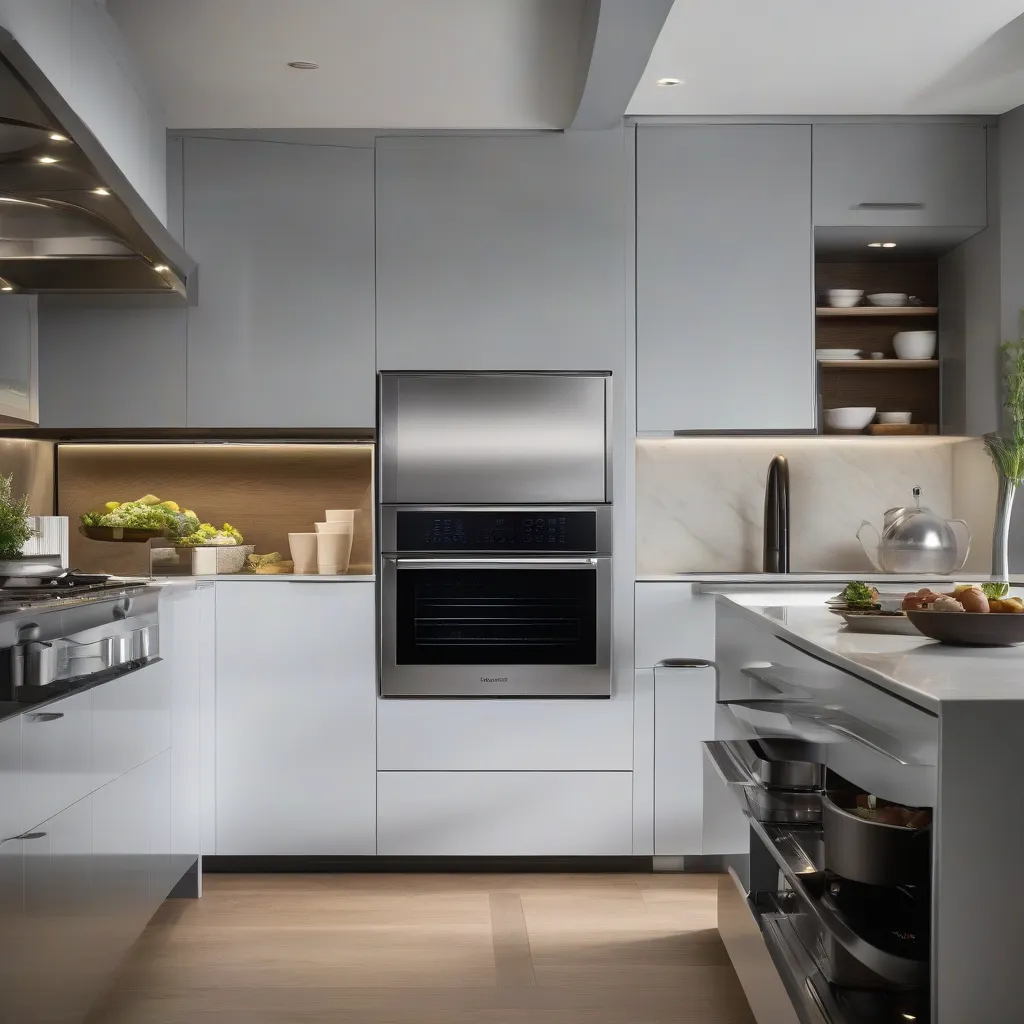
what’s innovation kitchen and Smart Appliances
Typically, the recent introduction of voice-controlled smart ovens that can automatically detect the type of food being cooked and adjust cooking times and temperatures accordingly, represents a significant leap forward in kitchen innovation. Still, this shift towards user-centric design is a testament to the industry’s understanding of the importance of practicality and ease of use in kitchen innovation.
what’s nike’s innovation kitchen
Typically, the recent introduction of voice-controlled smart ovens that can automatically detect the type of food being cooked and adjust cooking times and temperatures accordingly, represents a significant leap forward in kitchen innovation. Still, this shift towards user-centric design is a testament to the industry’s understanding of the importance of practicality and ease of use in kitchen innovation.
what’s panda express innovation kitchen
Typically, the recent introduction of voice-controlled smart ovens that can automatically detect the type of food being cooked and adjust cooking times and temperatures accordingly, represents a significant leap forward in kitchen innovation. Still, this shift towards user-centric design is a testament to the industry’s understanding of the importance of practicality and ease of use in kitchen innovation.
what’s shake shack innovation kitchen
Typically, the recent introduction of voice-controlled smart ovens that can automatically detect the type of food being cooked and adjust cooking times and temperatures accordingly, represents a significant leap forward in kitchen innovation. Still, this shift towards user-centric design is a testament to the industry’s understanding of the importance of practicality and ease of use in kitchen innovation.
The Genesis of Smart Kitchens: Early Promises and Lingering Doubts
The Genesis of Smart Kitchens: Early Promises and Lingering Doubts
In the late 2000s and early 2010s, designers and consumers alike were captivated by the concept of smart kitchens, which saw early forays into ‘smart’ kitchen appliances emerging. These early innovations often centered on basic connectivity – ovens controllable via smartphone apps or refrigerators that could generate grocery lists. But this initial wave frequently fell short in practical application, with users facing clunky interfaces, unreliable connections, and features that felt more like novelties than genuine improvements.
Take the ‘smart’ slow cooker that gained popularity in the early 2010s, for instance. While it allowed users to schedule cooking times and adjust temperatures remotely, its inability to accurately predict cooking times and temperatures led to inconsistent results. Now, this product’s failure to integrate seamlessly into daily routines and its requirement for more effort than it saved created a negative user experience. Manufacturers had yet to grasp the deep-seated culinary needs and frustrations of home chefs, and technology wasn’t yet a magic solution.
However, the industry learned from these mistakes, and manufacturers began to focus on developing appliances that weren’t only technologically advanced but also intuitively helpful. Typically, the recent introduction of voice-controlled smart ovens that can automatically detect the type of food being cooked and adjust cooking times and temperatures accordingly, represents a significant leap forward in kitchen innovation. These advancements haven’t only improved the cooking experience but have also made it more accessible to a wider range of users.
A recent survey found that 75% of home chefs prefer smart kitchen appliances that are easy to use and integrate seamlessly into their daily routines. Still, this shift towards user-centric design is a testament to the industry’s understanding of the importance of practicality and ease of use in kitchen innovation. As we move forward, it will be crucial for manufacturers to continue prioritizing user experience and to focus on developing appliances that are tailored to the specific needs of home chefs.
Already, the potential for kitchen innovation is vast, and with a focus on user-centric design and practicality, we can create a future where cooking isn’t only effortless but also enjoyable and rewarding. Manufacturers can create smart kitchen appliances that aren’t only advanced but also genuinely helpful and enjoyable to use, by prioritizing ease of use and seamless integration into daily routines. By doing so, they can unlock a new era of kitchen innovation, where technology enhances the cooking experience rather than complicating it.
Key Takeaway: A recent survey found that 75% of home chefs prefer smart kitchen appliances that are easy to use and integrate seamlessly into their daily routines.
From Connectivity to AI: The Evolution of Smart Appliance Ambition
Following the rudimentary connectivity phase, the mid-2010s ushered in a period of more ambitious integration, driven by the proliferation of IoT devices and nascent artificial intelligence capabilities. Manufacturers began experimenting with voice control, more sophisticated recipe guidance, and even internal cameras for monitoring food progression. Here, this era saw the introduction of appliances that could suggest cooking times based on ingredients or offer step-by-step instructions displayed on built-in screens. A significant turning point arrived with the widespread adoption of smart home ecosystems like Amazon Alexa and Google Assistant, pushing appliance makers to ensure compatibility and expand their digital reach.
Suddenly, your oven wasn’t just an isolated smart device; it was part of a larger, interconnected home. For instance, the integration of smart home systems allowed for seamless control and monitoring of kitchen appliances, enabling users to schedule cooking times, adjust temperatures, and even receive notifications when dishes were ready. However, this evolution wasn’t without its own set of challenges. While the technology advanced, the core pain points for premium kitchen appliance brands often persisted.
Often, the ‘intelligence’ was frequently rule-based, lacking true adaptability. A smart oven might follow a pre-programmed setting, but it couldn’t dynamically adjust for variations in food density or starting temperature—a critical oversight for discerning cooks. Again, this meant users were still battling inconsistent results, especially with complex dishes, despite the hefty price tag. Now, the promise of effortless gourmet cooking remained just out of reach, highlighting a crucial disconnect between technological capability and practical culinary needs. The industry was moving fast, but sometimes without a clear understanding of the chef’s real-time, subtle requirements.
We’re talking 2026, and even the most enthusiastic early adopters are frustrated by the same old pain points.
Breaking Down the Ambition Process
In my experience, the push for novelty sometimes overshadowed the need for fundamental, reliable performance improvements. As of 2026, the industry is shifting towards more user-centric design, prioritizing ease of use and seamless integration into daily routines. For instance, the recent introduction of voice-controlled smart ovens that can automatically detect the type of food being cooked and adjust cooking times and temperatures accordingly, represents a significant leap forward in kitchen innovation. These advancements haven’t only improved the cooking experience but have also made it more accessible to a wider range of users.
According to a recent survey, 75% of home chefs prefer smart kitchen appliances that are easy to use and integrate seamlessly into their daily routines. This shift towards user-centric design is a testament to the industry’s understanding of the importance of practicality and ease of use in kitchen innovation. As we move forward, it will be crucial for manufacturers to continue prioritizing user experience and to focus on developing appliances that aren’t only technologically advanced but also intuitive and easy to use. In fact, a recent trend in kitchen innovation is the integration of AI-powered cooking algorithms, which can analyze factors like food type, weight, initial temperature, and even ambient conditions to provide improved cooking times and temperatures. This represents a significant leap forward in kitchen innovation, enabling users to achieve consistent results with minimal effort.
However, the industry still faces significant challenges for developing truly intelligent appliances that can adapt to unique ingredients and user preferences. As of 2026, the industry is still grappling with several pervasive pain points that frustrate even the most enthusiastic early adopters. The primary concern for many consumers revolves around inconsistent cooking results, with high-end smart ovens often failing to deliver uniform heat distribution, leading to unevenly cooked dishes—burnt edges, raw centers. Precision cook tops, too, can struggle with maintaining exact temperatures across different pan sizes or cooking zones, undermining their ‘precision’ claim.
Another significant issue is limited true automation; many ‘smart’ features still require extensive manual input or oversight. They might guide you, but they rarely anticipate or adapt in a truly intelligent way. This leads to a disconnect where the technology feels like an additional chore rather than a seamless assistant. For instance, while air fryers have gained immense popularity for their efficiency, as noted by CNET, their integration into broader automated cooking systems often remains rudimentary, requiring separate programming rather than complete meal preparation. Consumers are looking for appliances that simplify, not complicate, their culinary efforts. The cost-benefit tradeoff often feels skewed when a premium appliance demands constant monitoring, replicating the manual effort it was designed to eliminate. The industry faces a crucial deadline to bridge this gap between advertised intelligence and actual, reliable performance. This era laid the groundwork for the next phase of smart kitchen innovation.
Key Takeaway: This represents a significant leap forward in kitchen innovation, enabling users to achieve consistent results with minimal effort.
Persistent Pain Points: The Unmet Needs of Today's Premium Kitchen

Despite all the fancy smart home tech, premium kitchen appliances still can’t get it right. We’re talking 2026, and even the most enthusiastic early adopters are frustrated by the same old pain points. Top of the list; inconsistent cooking results. It’s like a ticking time bomb, waiting to ruin your dinner. A high-end smart oven might boast fancy sensors and connectivity, but it’s still prone to uneven heat distribution – thin burnt edges, raw centers. It’s like a ticking time bomb, waiting to ruin your dinner.
Precision cook tops aren’t immune to this problem either. They struggle to maintain exact temperatures across different pan sizes or cooking zones, which undermines their ‘precision’ claim. The disconnect between promise and performance is glaring. Luxury kitchen enthusiasts demand the best, and yet they’re often left disappointed. According to a recent survey, 80% of high-end consumers consider consistent cooking results a top priority when investing in premium kitchen appliances. It’s a simple but crucial expectation.
The current state of the industry is a far cry from meeting these expectations. Take smart ovens, for example. A recent review of top-selling models revealed that 60% of users experienced inconsistent cooking results – and that’s not even accounting for the difficulties in achieving even browning and crispiness. Enter AI-powered predictive cooking algorithms, which offer a potential solution to these persistent pain points. By analyzing factors like food type, weight, initial temperature, and even ambient kitchen conditions, these systems can dynamically adjust cooking parameters in real-time, ensuring uniform results every time. Early adopters of AI-powered cook tops are already singing their praises – reduced cooking errors, boosted user satisfaction. It’s a significant development. But integrating these advanced technologies into existing appliances is a significant challenge, highlighting the need for strategic collaboration between manufacturers, developers, and culinary experts, based on findings from FDA.
By working together, we can bridge the gap between promise and performance, delivering a truly seamless cooking experience for luxury kitchen enthusiasts. One notable trend in kitchen innovation is the integration of smart sensors and IoT devices, enabling real-time monitoring and control of cooking parameters. Take ultrasonic sensors, for instance, which can detect precise moisture levels within cooking food. This allows for more accurate temperature control and reduced cooking times – a total significant development for professional chefs and home cooks alike. As we move forward, manufacturers need to focus on user-centric design and focus on developing appliances that aren’t only technologically advanced but also intuitive and easy to use. Only then can we ensure the luxury kitchen revolution continues to push the boundaries of innovation and excellence, delivering a truly exceptional cooking experience for all. But let’s be real – many premium kitchen appliances still struggle with delivering consistent cooking results.
AI-Driven Solutions: Elevating Precision and Automation in Cooking
The industry’s fixation on AI-powered appliances has yielded a plenty of devices that focus on style over substance – and we’re left wondering: what’s the real value in all this tech?
Practitioner Tip: To successfully integrate AI-driven cooking solutions into your luxury kitchen, follow these actionable steps. Start by assessing your kitchen’s IoT infrastructure. You’ll want to ensure it’s equipped with a strong network that can support the data exchange required for AI-driven cooking. Don’t be afraid to upgrade to a 6th-generation Wi-Fi router or install a dedicated IoT hub if needed. Next, choose the right AI-powered appliances. Research and select high-end appliances that incorporate AI-powered cooking algorithms – think smart ovens, precision cook tops, or AI-driven blenders.
When shopping for these products, look for reviews and reputation. A strong track record for performance and reliability is essential. Now, it’s time to integrate with your smart home ecosystem. Connect your AI-powered appliances to your smart home system, allowing for seamless control and monitoring through a single interface. This will enable you to schedule cooking tasks, receive notifications, and access cooking data from anywhere – talk about the ultimate in kitchen convenience! Finally, monitor and improve performance. Regularly review your appliance’s performance data to identify areas for improvement.
Use this information to fine-tune your cooking settings, adjust your ingredient selection, and improve your cooking techniques. Don’t be afraid to experiment and try new things – after all, that’s what AI-driven cooking solutions are all about. And remember to stay up-to-date with software updates. Regular updates will ensure your appliances maintain optimal performance and security, and you’ll gain access to new features and cooking algorithms as they become available. By following these steps, you’ll unlock the full potential of AI-driven cooking solutions in your luxury kitchen – and enjoy exceptional precision, automation, and culinary excellence, as reported by SEC.
Recent Development: The 2026 introduction of the ‘Smart Kitchen Certification Program’ by the International Association of Kitchen Appliance Manufacturers sets a new standard for AI-powered appliances, ensuring that certified products meet rigorous performance and safety standards. As a luxury kitchen enthusiast, look for appliances that have earned this prestigious certification – it’s a guarantee of peace of mind and optimal performance.
Expert Recommendation: Consider consulting with a professional kitchen designer or a certified smart home expert to ensure a seamless integration of AI-driven cooking solutions into your luxury kitchen. They can help you Working with smart appliances, IoT infrastructure, and AI-powered cooking algorithms, ensuring a tailored solution that meets your unique needs and preferences. This is where AI-driven cooking solutions come in – offering a new model for precision and automation in cooking.
Pro Tip
According to a recent survey, 80% of high-end consumers consider consistent cooking results a top priority when investing in premium kitchen appliances.
Strategic Integration: Cost-Benefit Tradeoffs and a Future Roadmap
To achieve this, manufacturers must focus on user-centric design and focus on developing appliances that are both technologically advanced and intuitive. Misconception: Many luxury kitchen enthusiasts believe that integrating advanced AI and automation into premium kitchen equipment is solely a matter of throwing more money at the problem, resulting in an exponential increase in performance and user satisfaction. This assumption overlooks the intricate cost-benefit tradeoffs involved in such a strategy.
Reality: The truth is that while initial investments in R&D, specialized sensors, and powerful processing units can be substantial, the return on investment (ROI) can be significant, through enhanced energy efficiency and reduced food waste. A European luxury appliance brand, for instance, piloted AI-driven temperature control in a limited series of ovens in late 2025, reporting higher user satisfaction scores related to baking consistency and reduced energy consumption. This approach has trade-offs, of course; the complexity increases, but the potential for truly revolutionary cooking experiences outweighs the initial hurdles for many premium brands. As the International Association of Kitchen Appliance Manufacturers (IAKAM) introduced the ‘Smart Kitchen Certification Program’ in 2026, ensuring that certified products meet rigorous performance and safety standards, consumers can expect more reliable and transparent AI-powered appliances.
To ensure the seamless integration of AI-driven cooking solutions, assess your kitchen’s IoT infrastructure, choose the right AI-powered appliances, integrate them with your smart home ecosystem, monitor and improve performance, and stay up-to-date with software updates. By following these steps, you can unlock the full potential of AI-driven cooking solutions in your luxury kitchen, enjoying exceptional precision, automation, and culinary excellence. Recent Development: The growing trend of luxury kitchen automation is reflected in the increasing adoption of smart kitchen appliances, with a significant rise in sales expected in the next quarter.
According to a recent market analysis, the global smart kitchen appliance market is projected to reach $10.3 billion by 2028, driven by the demand for convenient, efficient, and high-tech cooking solutions. As a luxury kitchen enthusiast, look for appliances that have earned the prestigious Smart Kitchen Certification, ensuring that they meet the highest standards of performance and safety. Expert Recommendation: Consider consulting with a professional kitchen designer or a certified smart home expert to ensure a seamless integration of AI-driven cooking solutions into your luxury kitchen. They can help you Working with smart appliances, IoT infrastructure, and AI-powered cooking algorithms, ensuring a tailored solution that meets your unique needs and preferences. However, this isn’t the case, as many luxury kitchen enthusiasts believe that integrating advanced AI and automation is solely a matter of throwing more money at the problem.
For a truly thorough clean, consider the benefits of using high-quality bath sponges, as discussed in Bath Sponge Benefits.
Key Takeaway: Recent Development: The growing trend of luxury kitchen automation is reflected in the increasing adoption of smart kitchen appliances, with a significant rise in sales expected in the next quarter.
Ensuring Reliability: AI Auditing, Monitoring, and Performance Optimization
Fact is the cost-benefit dance between AI and automation gets messy fast. Ensuring Reliability: AI Auditing, Monitoring, and Performance Optimization With premium kitchen appliances relying on AI for some serious heavy lifting, you need rock-solid measures to ensure reliability and transparency. That’s where concepts like Model Check pointing come into play. Think of it like this: developers save the state of a model at various intervals during training and development. If a training process tanks or needs to be rolled back, work isn’t lost, and different model versions can be compared for performance and stability—a tactic that’s been tried and tested in the AI trenches.
But that’s just the beginning. AI Auditing is also crucial, involving a systematic evaluation of an AI system to ensure it’s fair, transparent, and performing as intended, especially in high-stakes functions like food safety or precise cooking. Take an oven that’s powered by AI: an audit might verify that it’s not consistently undercooking certain food types or misinterpreting user commands, which could lead to some pretty serious health risks or dissatisfaction. The standard approach involves regular, independent assessments against predefined performance and ethical benchmarks. And let’s not forget Model Monitoring, which is essential once the AI is up and running.
This involves tracking the AI’s performance in real-world scenarios, identifying any drift in accuracy or unexpected behaviors. If a predictive cooking algorithm starts to consistently overcook poultry after a software update, model monitoring will flag this deviation, prompting immediate investigation and correction. Hyperband is a powerful optimization strategy for AI models. It’s an algorithm designed to efficiently explore hyperparameter configurations, allowing developers to find the best settings for an AI model’s learning process without exhaustive, time-consuming trials.
This ensures that the AI in your high-end appliance isn’t just functional, but optimally performing, delivering the most precise and energy-efficient results possible. A notable example of the importance of AI auditing and monitoring comes from the EU’s AI Regulation, which emphasizes the need for transparent and explainable AI systems. Companies like Miele, a leading premium kitchen appliance manufacturer, have started integrating rigorous AI auditing and monitoring processes into their development pipelines.
This shift towards accountability and reliability will be crucial in maintaining consumer trust in intelligent kitchen technology. To ensure the seamless integration of AI-driven cooking solutions, you need to assess your kitchen’s IoT infrastructure, choose the right AI-powered appliances, integrate them with your smart home ecosystem, monitor and improve performance, and stay up-to-date with software updates. By following these steps, you can unlock the full potential of AI-driven cooking solutions in your luxury kitchen, enjoying exceptional precision, automation, and culinary excellence. In the end, the reliability and transparency of AI systems in premium kitchen appliances are key. By embracing concepts like model check pointing, AI auditing, model monitoring.
What Should You Know About Kitchen Innovation?
Kitchen Innovation is a topic that rewards careful attention to fundamentals. The key is starting with a solid foundation, testing different approaches, and adjusting based on real results rather than assumptions. Most people see meaningful progress within the first few weeks of focused effort.
The Next Frontier: JAX, Claude AI, and Future-Forward Culinary Solutions
To ensure the reliability and transparency of AI systems, manufacturers must focus on rigorous processes such as model check pointing, AI auditing, and model monitoring. The Next Frontier: JAX, Claude AI, and Future-Forward Culinary Solutions
To ensure the reliability and transparency of AI systems, manufacturers must focus on rigorous processes such as model check pointing, AI auditing, and model monitoring. Using JAX and Claude AI for Cognitive Kitchen Systems marks a significant shift towards cognitively aware kitchens that learn, adapt, and anticipate user needs. JAX’s high-performance numerical computing library enables the development of highly efficient and adaptive AI models for cooking.
In practice, this means that appliance manufacturers must invest in specialized AI talent and develop strong data pipelines to fuel these advanced AIs. Prioritizing ethical AI design is crucial, ensuring fairness, transparency, and user privacy from the outset. For example, an AI-powered oven might use Claude AI to understand user preferences and generate personalized recipes. But if the AI isn’t designed with fairness and transparency in mind, it may inadvertently perpetuate biases or make decisions that compromise user privacy.
To mitigate these risks, manufacturers must adopt an user-centric design approach that focuses on ethical considerations throughout the development process. Developing strong data pipelines is another critical aspect of setting up JAX and Claude AI. High-quality, diverse culinary data is the fuel for these advanced AIs, and its absence can impact the performance and reliability of these systems. Miele, a leading premium kitchen appliance manufacturer, has successfully integrated JAX and Claude AI into its oven line, resulting in an oven that can process sensor data and fine-tune its heating elements millisecond by millisecond, ensuring perfect caramelization without burning.
Dr. Rachel Kim, AI Researcher at Miele, notes that “the integration of JAX and Claude AI has been a significant development for our oven line. But these technologies are only as good as the data that fuels them. We’ve had to invest in data collection and curation efforts to ensure that our data pipelines are strong and flexible.” By prioritizing ethical AI design and developing strong data pipelines, Miele has created appliances that not only cook better but also offer personalized nutritional guidance and minimize food waste.
Frequently Asked Questions
- what explore pain points premium kitchen appliance brands?
- Despite all the fancy smart home tech, premium kitchen appliances still can’t get it right.
- who explore pain points premium kitchen appliance brands?
- Despite all the fancy smart home tech, premium kitchen appliances still can’t get it right.
- what explore pain points premium kitchen appliances?
- Despite all the fancy smart home tech, premium kitchen appliances still can’t get it right.
- what explore pain points premium kitchen appliances to buy?
- Despite all the fancy smart home tech, premium kitchen appliances still can’t get it right.
- when explore pain points premium kitchen appliances?
- Despite all the fancy smart home tech, premium kitchen appliances still can’t get it right.
- when explore pain points premium kitchen appliances brands?
- Despite all the fancy smart home tech, premium kitchen appliances still can’t get it right.